
Solar panel Launceston: residential and commercial solar systems
Solar services in Northern Tasmania
Mance Electrical has wired Launceston homes and businesses since 1920, and we install, inspect, and maintain solar photovoltaic (PV) and battery systems across the 7250 postcode and wider Northern Tasmania. Our team designs grid-connected solar systems sized to your household consumption using quality, accredited products eligible for government incentives under the Small-scale Renewable Energy Scheme (SRES), including the Cheaper Home Batteries Program. Mance Electrical also services existing grid-connected solar and battery systems to Australian standards such as AS/NZS 5033 to maintain performance and safety.
Four generations of the Mance family have built this business on workmanship that lasts, and our solar work carries the same standard.
We cover the full lifecycle of a solar PV system with lifetime workmanship warranty. All work is performed by licensed Tasmanian electricians, and our solar designs are engineered to suit Tasmanian conditions.
- Solar PV system design
- Solar panel installation
- Grid-connected hybrid battery storage design
- Battery storage installation
- Solar panel inspection and repair
- Battery storage inspection and repair
Solar panel installation for Launceston homes
Most Launceston homes suit a 6kW to 10kW system, depending on roof space, household size, and whether you plan to add a battery or EV charger later. We carry out a roof assessment first, check shading patterns, review your switchboard capacity, and confirm grid connection requirements with TasNetworks before quoting. A typical residential install runs one to two days on site.
Our residential solar packages include:
- Tier 1 monocrystalline panels with minimum 25-year performance guarantee
- Quality inverters from leading brands and minimum 10-year warranty
- Hybrid solar-battery systems and battery-ready wiring compliant to AS/NZS 5139
- Safety isolation DC isolators or disconnection points compliant to AS/NZS 5033
- Switchboard upgrades where needed
- Energy monitoring app so you can track performance and household consumption
- TasNetworks and energy retailer applications for grid connection and feed-in tariffs
- Upfront discounts for government incentives (solar and battery STCs)
- STC paperwork lodged on your behalf with the Clean Energy Regulator
Solar inspections & maintenance
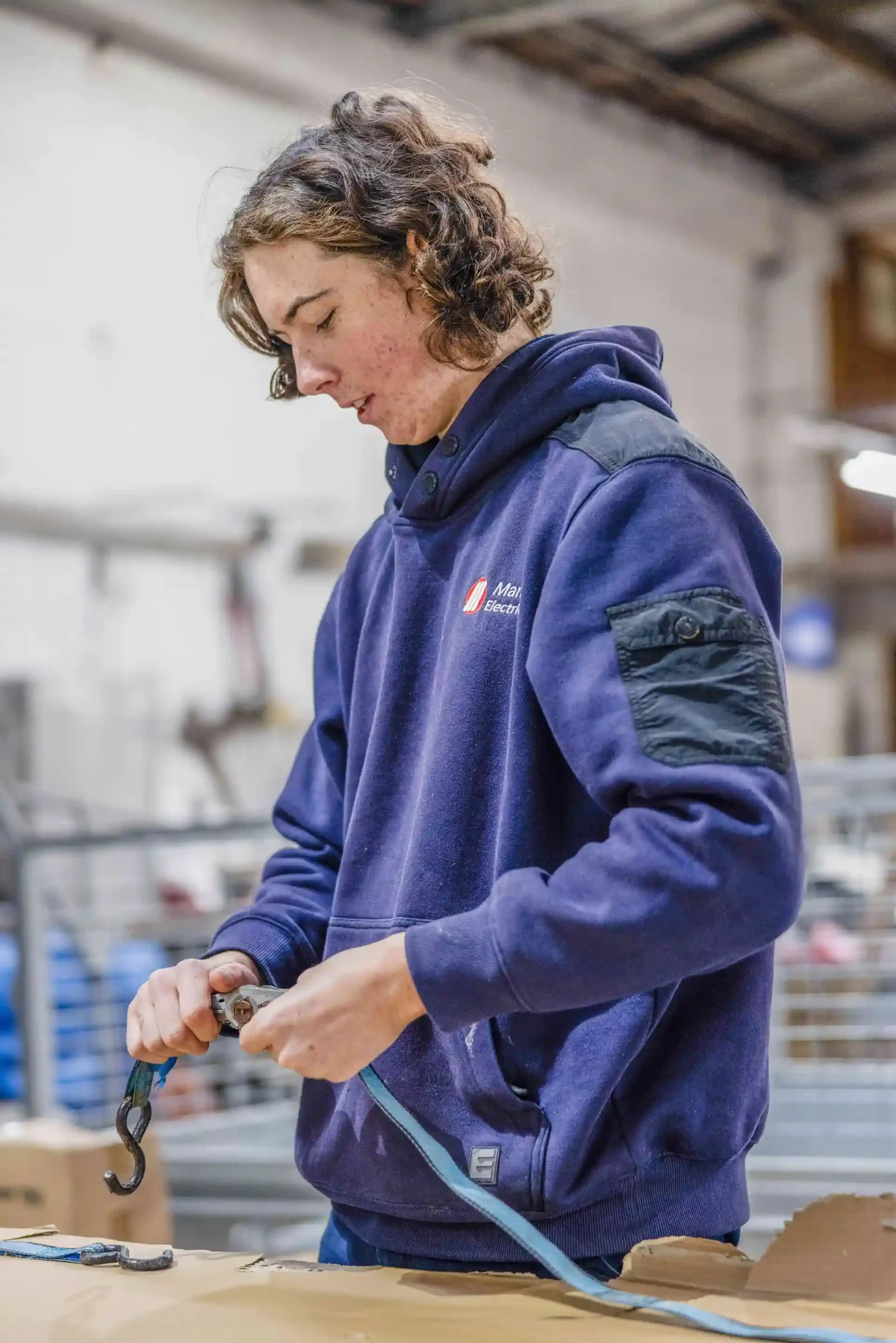
Solar systems lose output silently. A panel covered in lichen, a tripped DC isolator, or a degraded inverter capacitor can drop your generation 10 to 30% without any obvious sign. Mance Electrical inspects and maintains solar photovoltaic (PV) systems to relevant standards, including AS/NZS 5033. This includes test isolators and earthing, thermal-image junction boxes and panels, cleaning panels and inverters, and producing a written compliance report.
Most homeowners install solar and never look at it again until a bill spikes. By then, the lost generation has often run into hundreds or even thousands of dollars.
Mance Electrical inspections includes:
Visual checks
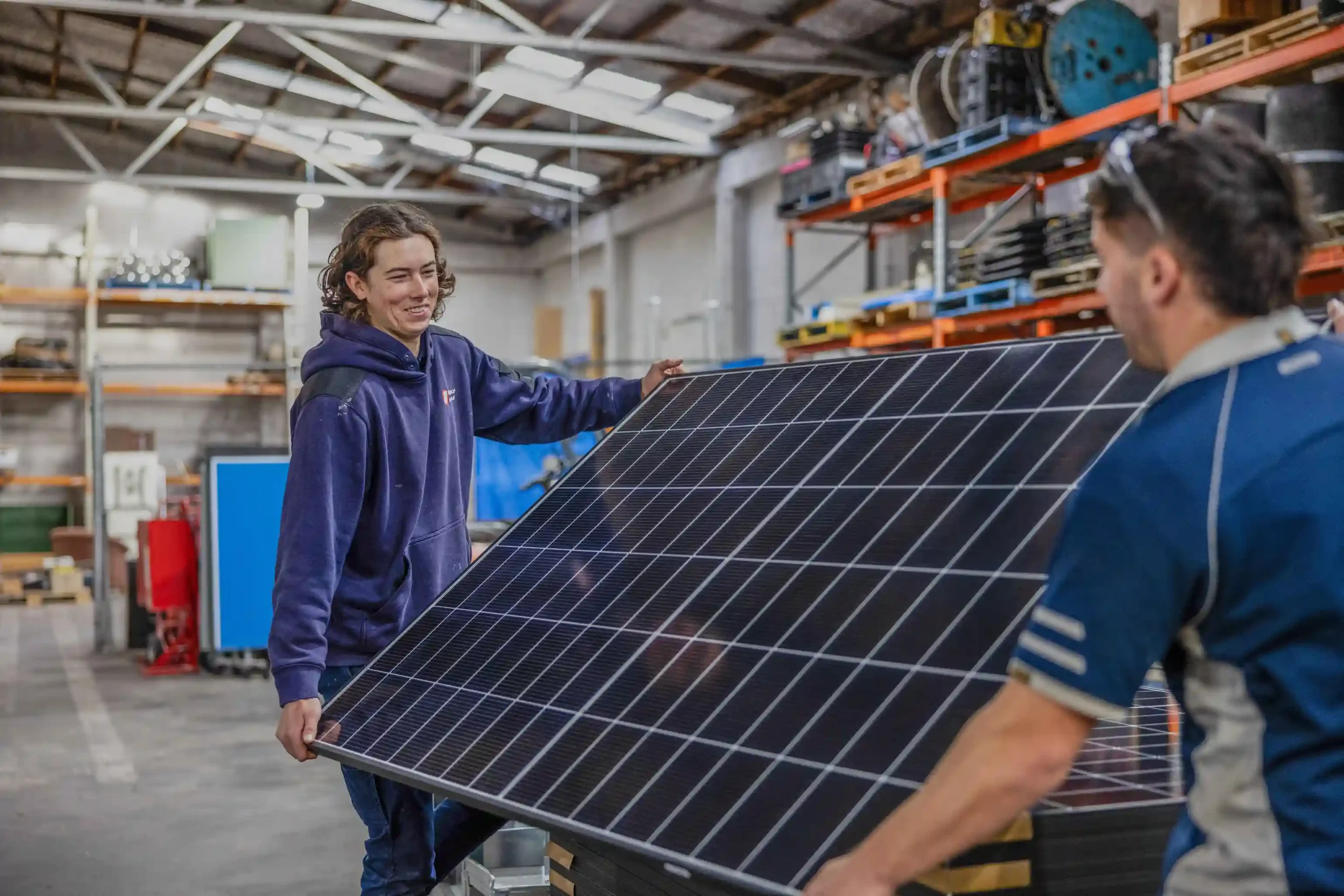
Visual check of all panels for delamination, cell discolouration, and frame corrosion
DC isolator testing
A known failure point in Tasmanian conditions
Inverter performance
Inverter performance log review and earth resistance measurement
Thermal imaging
Thermal imaging of junction boxes and combiner boxes
Switchboard checks
Switchboard and consumer mains check
Panel cleaning
We use deionised water, no chemicals on glass
When to get your solar power system inspected. We recommend a full inspection:
We recommend a full inspection:
- 12 months after installation (commissioning verification)
- Every 2 to 3 years thereafter for residential systems
- Annually for commercial systems, or as required by your insurer
- After any major storm, hail event, or roofing work
- Whenever your generation drops more than 10% year-on-year
Commercial solar Launceston
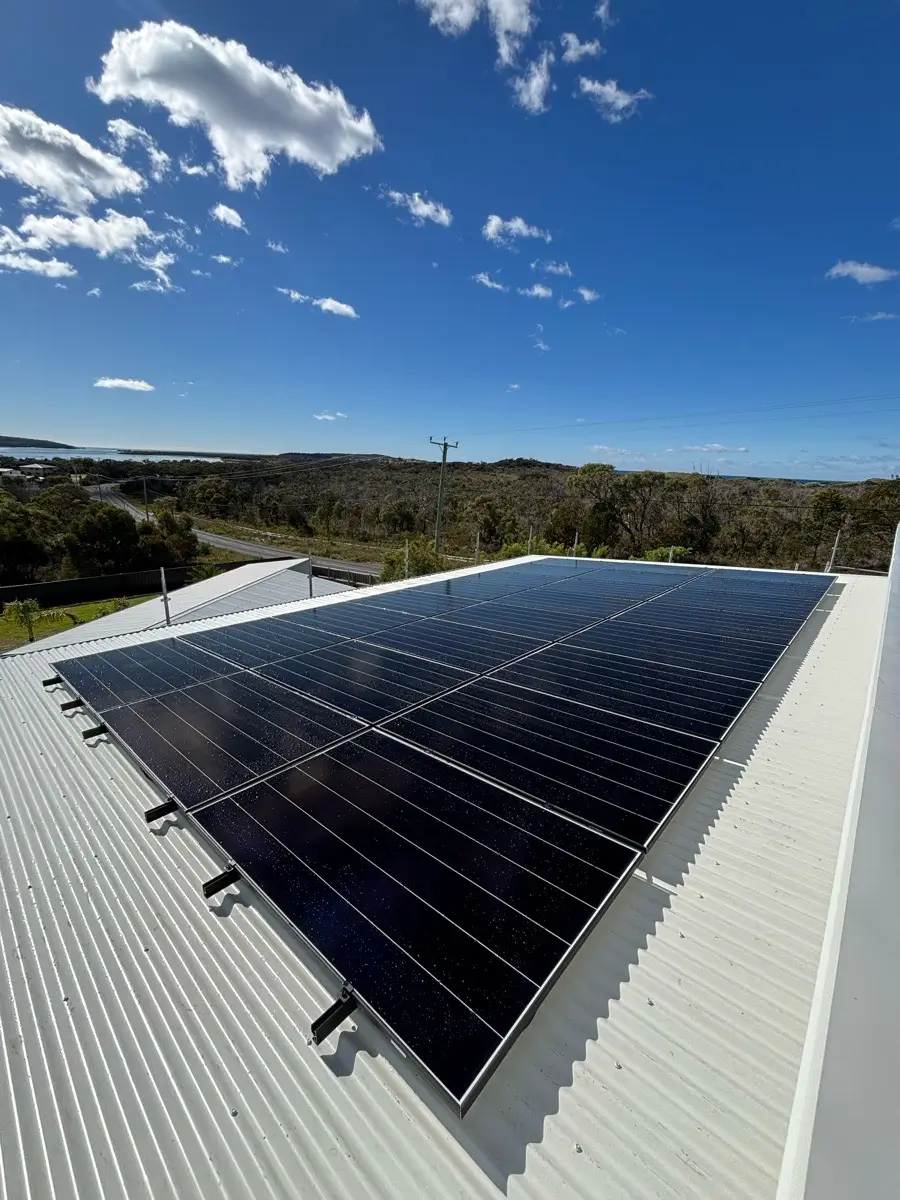
Mance Electrical designs and installs commercial solar PV systems for Launceston businesses. Businesses we've powered across Launceston include warehouses, mechanical workshops, cafes, hospitality venues, retail premises, healthcare clinics, aged care facilities, professional offices, and agricultural operations across the Tamar Valley.
A commercial solar installation typically ranges from 10kW to 100kW, sized to your daytime energy consumption profile and roof space.
Systems above 30kW require additional TasNetworks (Tasmania's electricity network operator) assessment before connection. We manage the full application process, from load analysis through to energisation sign-off.
Most Launceston commercial solar clients see a return on investment within 4 to 6 years, driven by high daytime self-consumption that offsets grid electricity costs. The federal STC rebate applies to commercial systems up to 100kW, and we lodge all paperwork for compliance and claiming government incentives on your behalf.
What size commercial solar system does your business need?
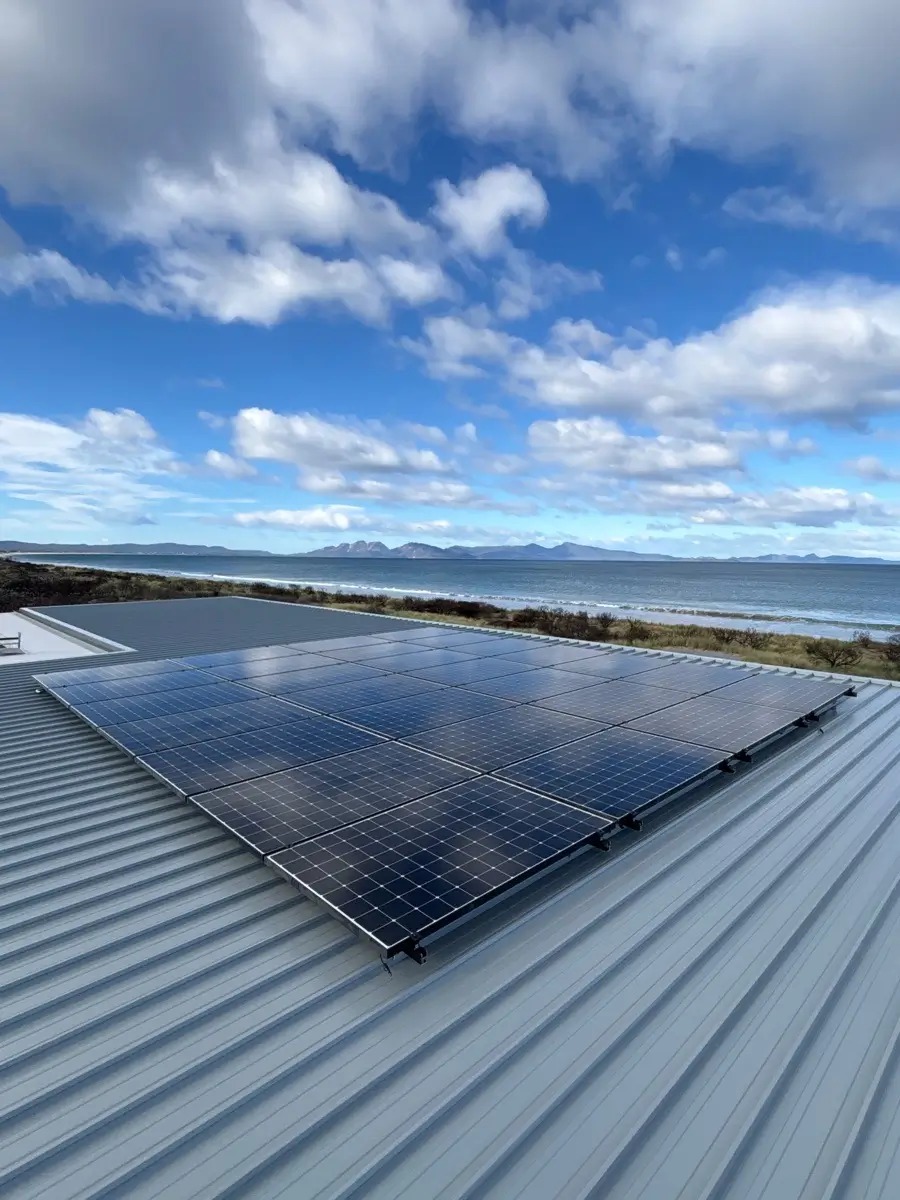
We typically size commercial systems to match daytime load, because self-consumption is where the real savings are. Exporting to the grid at Tasmania's regulated feed-in tariff yields lower returns than directly consuming your solar energy and avoiding buying at a higher rate in the first place. Some export is inevitable though, particularly in summer when Tasmania loads are genarally lower and solar generation is much higher. We also take into account the roof area, orientation and pitch to provide a realistic performance estimate during the design and quoting process.
Small business (10 kW to 30 kW)
Retail shopfronts, cafes, small professional offices, and light hospitality venues.
Typically single-phase or small three-phase, straightforward TasNetworks approvals and energy plans.
Medium commercial (30 kW to 100 kW)
Warehouses, workshops, medical clinics, gyms, larger hospitality venues, and small manufacturing.
Three-phase, requires TasNetworks technical assessment and negotiated connections before install and changes to feed-in tariff eligibility (check with your retailer).
Large commercial and industrial (100 kW to 1 MW)
Cold storage, food processing, larger warehouses, aged care, education facilities, supermarkets and agricultural operations.
From 1 October 2026, systems up to 1 MW qualify for upfront STCs under the expanded Small-scale Renewable Energy Scheme (SRES), replacing the previous 100 kW ceiling.
Solar rebates & incentives in Tasmania
There are two active incentives for Launceston homes and businesses in 2026. We can help you with any of these:
Federal STC Solar Rebate
The Australian Government’s Small-scale Renewable Energy Scheme (SRES) provides an upfront incentive (“rebate”) for eligible solar systems through Small-scale Technology Certificates (STCs).
System owners can assign their STCs to their installer in exchange for a point-of-sale discount, typically reducing the cost of a 6.6kW system by around $1,400 and a 10kW system by $2,200. The STC incentive helps shorten payback periods and makes solar more affordable from day one.
Cheaper Home Batteries Program
The Australian Government's Cheaper Home Batteries Program makes energy storage more affordable via a point-of-sale discount on eligible batteries connected to new or existing solar.
The battery Small-scale Technology Certificates (STCs) incentive is tiered based on the battery's usable capacity, with the highest level of support applied to the first 5 to 14 kWh and reduced rates available for larger systems (up to 100kWh). For many households, the program can reduce the upfront cost of a battery by around 30%, making solar storage and backup power more accessible than ever.
Powering Launceston with sustainable solar energy
We’ve been lighting up Launceston since 1920. At Mance Electrical, we combine technical expertise with a customer-first approach to deliver safe, reliable, and efficient electrical upgrades and installations. Our licensed electricians take the time to understand your needs, whether it’s installing new systems or upgrading old ones.
We provide services around Invermay, Newstead, South Launceston, Kings Meadows, Trevallyn, Prospect, Ravenswood, Norwood, Youngtown, Mowbray, West Launceston and the wider Tamar Valley/Northern Tasmania.
100+ years in Launceston
William Mance started the business in 1920. Jonno and Vanessa Cole now own and run it. Same name above the door, same standards.
Locally licensed and SAA accredited
All solar and battery systems are designed and installed by our professionals accredited by Solar Accreditation Australia (SAA). All work is completed and certified by Tasmanian licensed electricians using products approved by the Clean Energy Council (CEC) to Australian Standards.
End-to-end electrical capability
Because we are full-service electricians, we can do your switchboard upgrade, EV charger, and solar install as one job, not three separate trades.
Local team, local warranty support
Our office is at 10 Robertson Street Launceston, our team lives in the region, and warranty callbacks are handled by the same people who did the install.
Other services
To help meet workplace safety obligations, we also provide routine test and tag services for commercial equipment.
Construction projects and events can be supported through compliant temporary power connections where short-term supply is required.
Hidden faults and overheating issues can be identified early using professional thermal imaging inspections.
If something goes wrong unexpectedly, our emergency electrical services are available to assist with urgent residential electrical issues.
Frequently asked questions about solar energy and solar panels Launceston
How many hours of peak sunlight does Launceston get?
Around 4 peak sunlight hours per day averaged across the year, with solar irradiation of 4.14 kWh/m²/day (Bureau of Meteorology, Ti Tree Bend), which relates to how much energy your solar power can generate. Every house is different with orientation, pitch and shading that also need to be accounted for. We use the latest design software to simulate a realistic performance estimate based on local conditions and product selection.
What direction should solar panels face in Launceston?
North-facing panels produce the maximum annual output at a pitch of 42 degrees, the latitude of Launceston. Most house roofs are pitched between 10 to 25 degrees, which still works well, and it usually isn’t viable to change using tilt frames due to the added cost and space requirement. East and west-facing solar arrays are also common for households with higher morning and/or afternoon consumption even though there is a peak performance deficit. We work with you to assess the most suitable roof areas to get you the best system size and performance for your property and make sure you understand the variables.
How much does a 6.6kW solar power system cost in Launceston?
Most quality 6.6kW systems land between $6,600 and $9,500 fully installed, after the STC discount (rebate) is applied at point-of-sale. Final pricing depends on panel and inverter brand selection, switchboard work, and install complexity. This is a common system size driven by mainland conditions, but we often go bigger than this in Tasmania to help with those winter bills.
Can I add a battery to my existing Launceston solar system?
Yes, we retrofit batteries to existing grid-tied solar systems regularly. The Cheaper Home Batteries Program rebate applies to retrofits, not just new packages, but can only be claimed once. We have a range of AC-coupled and hybrid systems to choose from after we assess your current setup.
Do I need council approval to install solar panels in Launceston?
No council approval is needed for standard residential rooftop solar in most of Launceston. It becomes a requirement to engage a building surveyor and obtain a Notifiable Work Permit for some larger residential systems, using tilt frames and for commercial properties in Tasmania. Heritage-listed properties or buildings in heritage precincts will also need approval. We check this during the site assessment and design phase and can take care of all the approvals and paperwork if needed.
Is the Tasmanian Energy Saver Loan Scheme still available?
No, it closed on 1 September 2025. The federal Cheaper Home Batteries Program is the current incentive for battery purchases, alongside standard STC discounts for solar. There are alternatives to help with the upfront cost of installing solar and battery systems we can discuss with you during a site visit.
Who can legally service a solar system in Tasmania?
Any work on the electrical components (inverter, isolators, wiring) requires a licensed Tasmanian electrician. Panel cleaning alone does not, but combined inspection and cleaning visits should be done by a qualified electrician with solar accreditation.
Does solar increase property value in Launceston?
Yes. Research suggests solar can increase the value of homes in regional Tasmania, with solar-equipped properties estimated to achieve around 3.1% higher values on average. The exact benefit will vary depending on factors such as the property's location and the solar system installed. In addition to the potential resale benefit, you'll enjoy lower electricity bills and greater energy independence while you own the home.
What size commercial solar system does your business need?
The size is unique to the business and depends on a variety of factors such as suitable roof space and electricity usage. Mance Electrical will assess and discuss these variables and appropriate solutions during a comprehensive site assessment consultation. All our commercial systems are unique and engineered for your needs, Australian Standards and Tasmania-specific rules and regulations.
How long is the payback on commercial solar in Tasmania?
Payback periods vary based on system size, roof orientation, product selection, shading, usage profiles and tariffs. We will provide an estimate after completing a consultation, design and quote, but you can typically expect payback periods between 3 to 5 years with an appropriate system design.
Do commercial solar systems qualify for the STC rebate?
Yes, commercial solar PV systems up to 100kW solar array capacity are eligible for upfront discounts using Small-scale Technology Certificates (STCs) under the Small-scale Renewable Energy Scheme (SRES). The Australian Government has announced it will expand the SRES to support mid-scale solar PV systems up to 1MW from October 2026. All quotes will indicate the STCs eligibility based on the expected installation timeframe discussed. Visit the Clean Energy Regulator for more information
What is the feed-in tariff for in Tasmania?
The feed-in tariff in Tasmania is set by the Regulator each financial year and can vary between energy retailers and system sizes (recently between 8 to 12c/kWh). Compliant systems with inverter capacity less than 10kVA for single-phase and 30kVA for 3-phase are eligible, with larger systems subject to negotiated supply agreements. We will review your energy retailer and tariffs during the quote process and provide advice to get the most out of your system, but always check directly with your electricity retailer what applies to your home or business. Please note that some systems are also subject to export limits depending on local infrastructure, design constraints, system size, site usage and TasNetworks assessment.
Does my business need TasNetworks pre-approval for solar?
Yes, all solar PV system and battery installation require approval from the Distribution Network Service Provider (DNSP) prior to installation. We manage the application process on your behalf with TasNetworks and can't begin installation without it that usually takes less than 1 week for smaller systems. Solar PV systems over 10kVA per phase undergoes an additional technical assessment and that may require a non-refundable application fee that we will advise you off in our quote. Mance Electrical manages the grid connection process on your behalf and will advise you throughout, including potential impacts of design changes, export limitation or interface protection requirements.
Can I claim solar as a business tax deduction? (Small Business Energy Incentive / instant asset write-off context)
Eligible businesses may claim an instant asset write-off for the business portion of the cost of a solar or battery asset in the year it is first used or installed ready for use (after the STC discount). Check with the ATO or your accountant for limits and eligibility.
What happens during a grid outage on a commercial system?
A standard grid-connected solar PV system must disconnect itself from the network during a grid outage to protect technicians and infrastructure during repairs or alterations. Your solar PV system also won't operate when backup generators are in use. The only way your solar can keep working for you is to install battery storage that includes backup functionality. Not all inverters and batteries provide the same energy security so let us know your requirements and we will find the best solution.
Do I need three-phase power for commercial solar?
Many commercial properties have 3-phase power supplies and this is required for solar PV systems greater than 30kVA. The largest system you can have connected to the grid on single-phase is 10kVA.
Do you install off-grid solar and battery systems?
No, Mance Electrical installs hybrid grid-connected solar PV and battery systems for residential and commercial applications. Using quality products with seamless whole-home backup integration can get you very close to being self-sufficient, but you always have that grid-connection security for those longer periods of wet weather or times your demand increases significantly.
What size solar system does my house need?
For most homeowners, the best solar system size depends on your energy usage, suitable roof space, and shading. As a rule of thumb, installing the largest system your roof and budget allow often delivers the greatest long-term savings. Single-phase homes can typically install up to a 10kW inverter, while three-phase properties may install up to 30kW (subject to TasNetworks approval). Solar panels can usually be oversized to 133% of the inverter size and still qualify for STC rebates, or up to 200% with hybrid battery systems. Our comprehensive consultation process and obligation-free quote is the best way to find out.